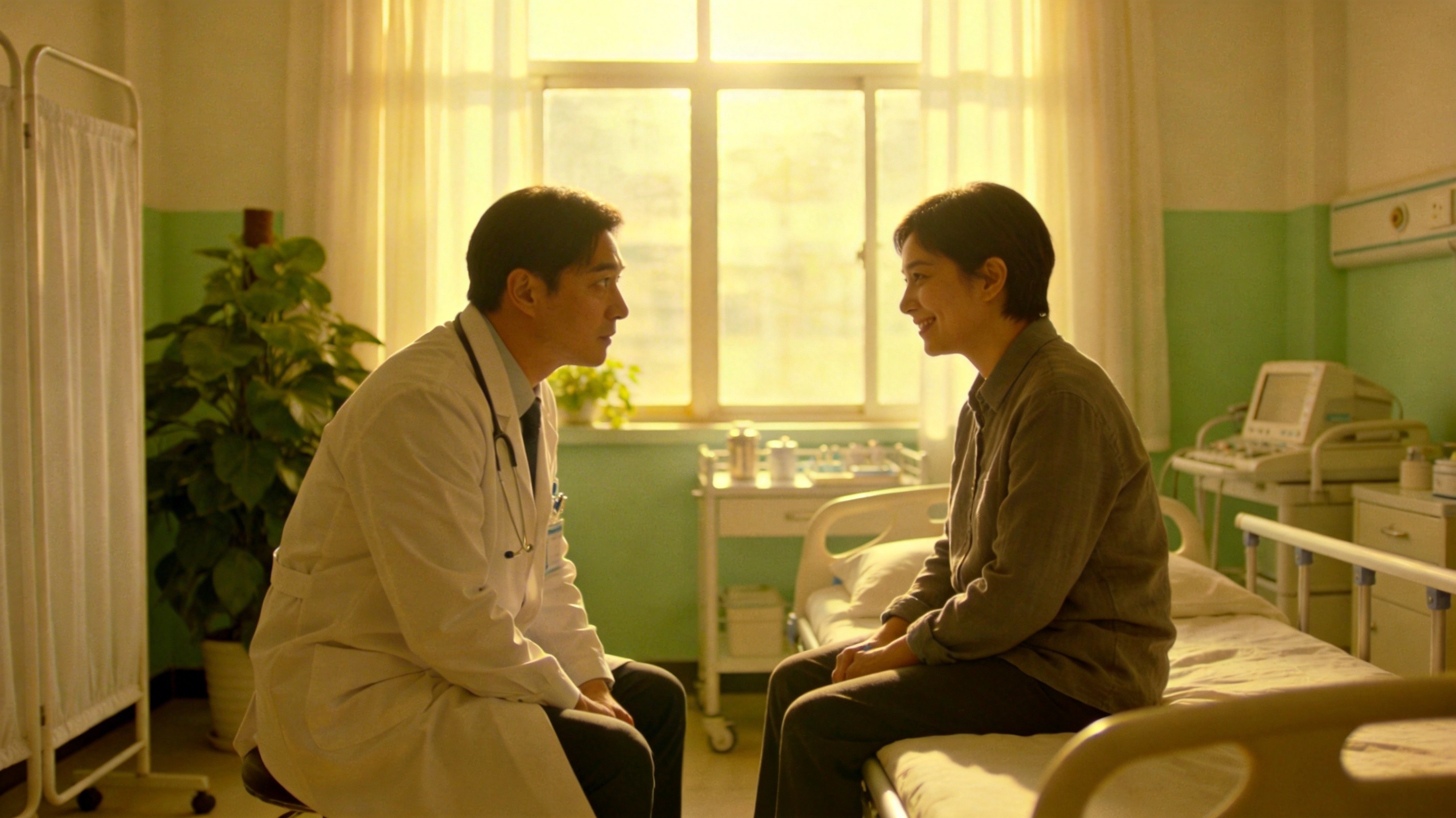
The hardest conversations can also be the most healing.
In my ten years of counseling families facing cancer, I've sat with countless parents struggling with the same heartbreaking question: "How do I tell my child?" The fear of causing trauma, the uncertainty of what they can understand, the overwhelming desire to protect them—these emotions are universal among parents navigating a cancer diagnosis.
I remember vividly a session with Mark, a father of three diagnosed with stage III colon cancer. He clenched his fists, voice trembling: "My youngest is only four. How can I possibly explain this without terrifying her?" We spent that hour not just planning words, but building a framework of emotional safety that would carry his family through the hardest months ahead. That framework is what I want to share with you today.
Why This Conversation Matters More Than You Realize
Children are remarkably perceptive. They notice changes in routine, whispered phone calls, the extra hugs, the unexplained tears. When left in the dark, their imaginations often construct scenarios far more frightening than reality. A study in the Journal of Pediatric Psychology found that children who receive clear, age‑appropriate information about a parent's illness show significantly lower anxiety levels and better long‑term adjustment.
This isn't about delivering perfect news—it's about opening a door for ongoing dialogue, reassurance, and connection. The goal isn't to eliminate their worry (that's impossible), but to give them a safe container for it.
Ages & Stages: Tailoring Your Approach
Developmental stage dramatically shapes what children can process. Below, I break down strategies for three broad age groups, illustrated with real‑life examples from my practice (names and details altered for confidentiality).
Toddlers & Preschoolers (2–5 years)
Simple metaphors through stories can comfort the youngest children.
What they understand: Very concrete thinking. Illness is often seen as something "bad" inside the body that can be "fixed." They may believe they caused the illness through misbehavior (magical thinking).
Key phrases to use:
- "Daddy has a sickness called cancer. It's not like a cold—it's stronger, so the doctors are giving him special medicine to help his body fight it."
- "You didn't do anything to cause this. It's nobody's fault."
- "Sometimes I might feel tired or need to rest more. That's the medicine working."
What to avoid: Euphemisms like "passed away" or "lost the battle" can confuse them. Avoid saying "everything will be fine" if outcomes are uncertain.
Toolkit: Picture books (The Hope Tree, Nowhere Hair), simple drawings of "good cells fighting bad cells," consistent routines.
School‑Age Children (6–12 years)
Art provides a non‑verbal outlet for complex emotions.
What they understand: More logical, curious about mechanisms. They may worry about contagion, inheritance, and daily logistics. They seek concrete information but also need emotional validation.
Key phrases to use:
- "Cancer is a disease where some cells in the body grow out of control. It's not contagious—you can't catch it from hugs or sharing food."
- "The treatment will make me feel sick sometimes, but it's helping me get better."
- "It's okay to feel sad, angry, or scared. Those feelings are normal. Let's talk about them."
What to avoid: Overloading with technical details. Don't dismiss their fears as silly.
Toolkit: Simple diagrams of treatment, a family calendar showing hospital visits, designated "check‑in" times, encouraging questions.
Teenagers (13–18 years)
Honest, peer‑like conversations respect their growing maturity.
What they understand: Nearly adult comprehension of illness and mortality. They may grapple with existential questions, role reversal (feeling they need to care for the parent), and social isolation.
Key phrases to use:
- "I want to be honest with you about my diagnosis and treatment plan. You're old enough to understand, and I value your perspective."
- "This is my journey to handle, not yours. Your job is still to be a teenager—focus on school, friends, and your own growth."
- "We can set up regular times to talk, or you can come to me anytime. I also encourage you to talk with a counselor if that feels helpful."
What to avoid: Shielding them completely (they'll find out anyway). Don't burden them with adult responsibilities or financial worries.
Toolkit: Including them in some medical discussions (if they wish), connecting them with support groups for teens, respecting their need for space while affirming availability.
Four Practical Tips for Any Age
- Choose a calm moment when you have time to stay present. Sit side‑by‑side (less confrontational than face‑to‑face).
- Use the word "cancer" clearly. Avoiding the term breeds mystery and fear.
- Validate every emotion. "I see this makes you sad. That's completely okay."
- End with hope and continuity. "We will get through this together. Our love doesn't change."
The Long‑Term View: Building Resilience
This initial conversation is just the first step. Over the following weeks and months, keep the channel open. Encourage questions, even if you don't have all the answers. Model healthy coping—let them see you cry, but also show how you comfort yourself.
"The goal isn't to have a single perfect talk. It's to start a conversation that will evolve as your family does—a conversation rooted in honesty, layered with compassion, and fortified by the unshakable truth that you are still a parent, and they are still your child."
In my work, I've witnessed families fracture under the weight of silence, and I've seen others grow closer through shared vulnerability. The difference often comes down to this: Did they find a way to talk about the hard thing? You can be the family that talks.
Christopher Martin, PhD, is a clinical psychologist specializing in pediatric oncology support. He leads workshops for healthcare providers and writes the newsletter Heart of the Matter for families facing serious illness.
This article is for informational purposes and does not replace professional psychological care. If you need support, please reach out to a licensed therapist or your medical team.
© 2026 Cancercura.com. All rights reserved.