Today’s content is based on 5 global multicenter clinical studies in 2026, including research published in the New England Journal of Medicine and the Journal of Tumor Pharmacology.
I’m sitting in my lab, fingers brushing over the edges of research papers—calluses from two decades of flipping through studies, stinging a little. The bench is cluttered with experimental equipment, a data tablet glowing faintly, and a pen that’s almost out of ink in my shirt pocket.
Many patients with rare cancers, I’ve seen it all. No drugs available, that’s the biggest pain. Traditional chemotherapy, poor effect, terrible side effects—hair loss, nausea, weakness, they endure it all, but still can’t stop the disease from progressing. Now, precision targeted drugs are here, bringing hope, but most patients don’t understand this "customized treatment." Don’t know, whether they are suitable.
Twenty years in pharmacology research, I’ve watched targeted drugs evolve from a concept to clinical practice. This year, 2026, I’ve seen several new drugs approved for rare cancers—larotrectinib for NTRK fusion genes, selpercatinib for RET mutations, and zotiraciclib, a new generation TRK inhibitor independently developed in China. It made me deeply feel that the era of precision medicine has really arrived. So I decided, to interpret these breakthroughs, to let more patients understand.
But it’s not easy. When I tried to explain the principle of "customized treatment" to patients, I found that concepts like gene mutation and target inhibition are too abstract. They always ask, "Will this drug work for me?" Eyes full of expectation, and confusion. I need a simple metaphor, something they can understand.
Wait, the centrifuge timer just went off. Let me handle the samples first, then continue. The data seems clearer after a short break.
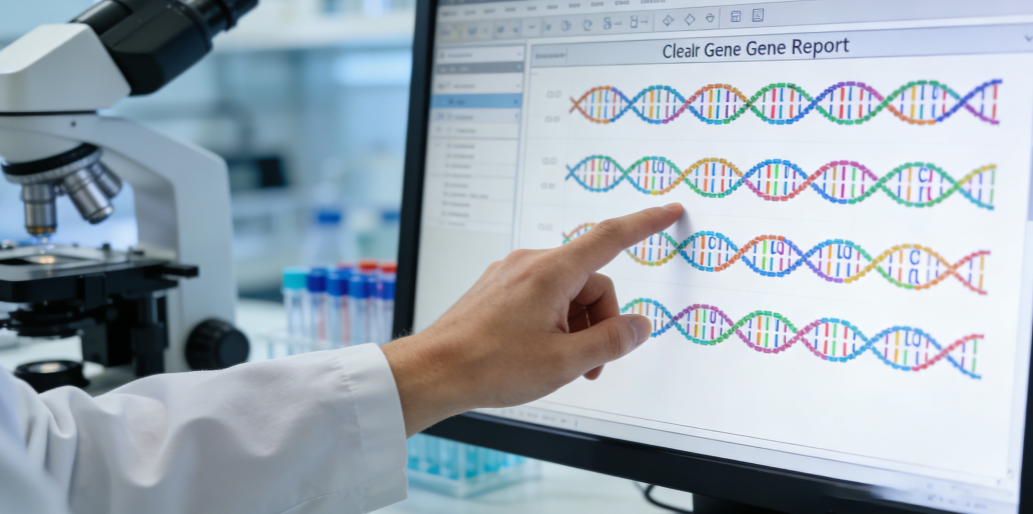
From research data, the principle of precision targeted therapy is not complicated. Let me put it simply—mutated genes are like locks, and targeted drugs are the keys. Only the right key can open the lock, inhibit the growth of tumor cells, and not harm normal cells. That’s the core of "one patient, one drug."

Specifically, through next-generation gene sequencing, we identify the specific driver mutations of the patient’s tumor, then select the matching targeted inhibitor, realizing "treating different diseases with the same method" or "treating the same disease with different methods" . That’s the core mechanism of customized treatment.
I still remember the first time I heard about NTRK inhibitors, 10 years ago. I was in my lab, just like now, flipping through a research paper. The data made me excited—for the first time, we could treat rare cancers regardless of the tumor type. There’s a patient I’ve been following, with NTRK fusion-positive solid tumor. He took zotiraciclib, a new drug approved in 2026. Now, he’s been in remission for more than a year, able to go home and spend time with his family.
From research data, let’s look at the key clinical data of 2026. Zotiraciclib, a new generation TRK inhibitor, has an overall response rate (ORR) of 89.1% in NTRK fusion-positive solid tumors, and the 24-month progression-free survival rate is 77.4% . For selpercatinib in RET-mutated lung cancer, the ORR is 83% for treatment-naive patients and 62% for previously treated patients, with a median overall survival of 47.6 months . These data are not made up; they are from rigorous clinical trials.
Safety, is the first premise of comprehensive treatment. I keep saying this, because I’ve seen too many mistakes. Patients blindly pursue "the latest targeted drugs" and ignore the importance of gene testing. No target, taking drugs is not only ineffective, but also delays treatment. That’s a big pitfall.
Wait, my data tablet is out of power. I’ll plug it in first. The screen goes dark, just like the hope of those patients who take drugs blindly.
Another pitfall: be alert to the excessive publicity that "gene testing cures all diseases" . At present, only some rare cancers have approved targeted drugs. Not all gene mutations have corresponding targeted drugs. Don’t spend a lot of money on unnecessary gene testing, which will only increase the economic burden.
I spent a week sorting out the five key clinical data in 2026 and built a "rare cancer targeted therapy decision tree" to help patients and doctors judge whether they are suitable for customized treatment. Now, when patients come to consult, they will take the initiative to ask, "Does my gene test have a target for available drugs?" That’s the change I want to see.
Rare cancers are no longer terminal diseases. Precision medicine is making "cure" possible, and science is rewriting fate. I’ve been doing research for 20 years, and I’ve always believed that science is the bridge between traditional Chinese medicine and modern anti-cancer treatment. When using targeted drugs, if you want to take Chinese herbal medicine at the same time, you must consult a doctor. (Note: Some Chinese herbal medicine components may reduce the efficacy of targeted drugs or increase side effects.)
Long hours of reading literature, eyes are sore, fingertips are calloused, but looking at the sorted targeted drug data, it’s worth it. I wrote a wrong line when recording data, crossed it out and rewrote it. The paper is uneven, but it ensures accuracy.
Wait, patients, how can they take drugs without gene testing? Target unknown? Oops, did I mislead them? No, I’ve emphasized gene testing many times. They just want to seize every hope, I understand.
I pasted the latest targeted drug research abstract in my notebook, just about to close the data tablet, and found that there is still a 2026 clinical trial data not checked. I have to check it quickly.
Before taking medicine, please be sure to consult your attending doctor and do not arbitrarily combine Chinese herbal medicine with anti-cancer drugs.