The hospital room is a place of thresholds. You cross from wellness into illness, from certainty into waiting, from the familiar rhythms of home into the sterile pulse of machines. The walls are pale, the floors are polished to a high shine, and the air carries the faint scent of antiseptic—clean, but not comforting.
In such an environment, the smallest things can take on an outsized significance. A beam of sunlight that angles through the window at just the right hour. The first sip of hot water after a long night. These are not grand pleasures, but they become, in their quiet way, lifelines.
The Cathedral of Light
I remember the first time I noticed the light. It was my third day after the diagnosis, and I was lying in bed, feeling the weight of the news settle into my bones. The morning had been a blur of tests and consultations. My mind was racing with statistics and treatment plans, a whirlwind of words that meant both everything and nothing.
Then, around three in the afternoon, a sliver of gold spilled across the floor.
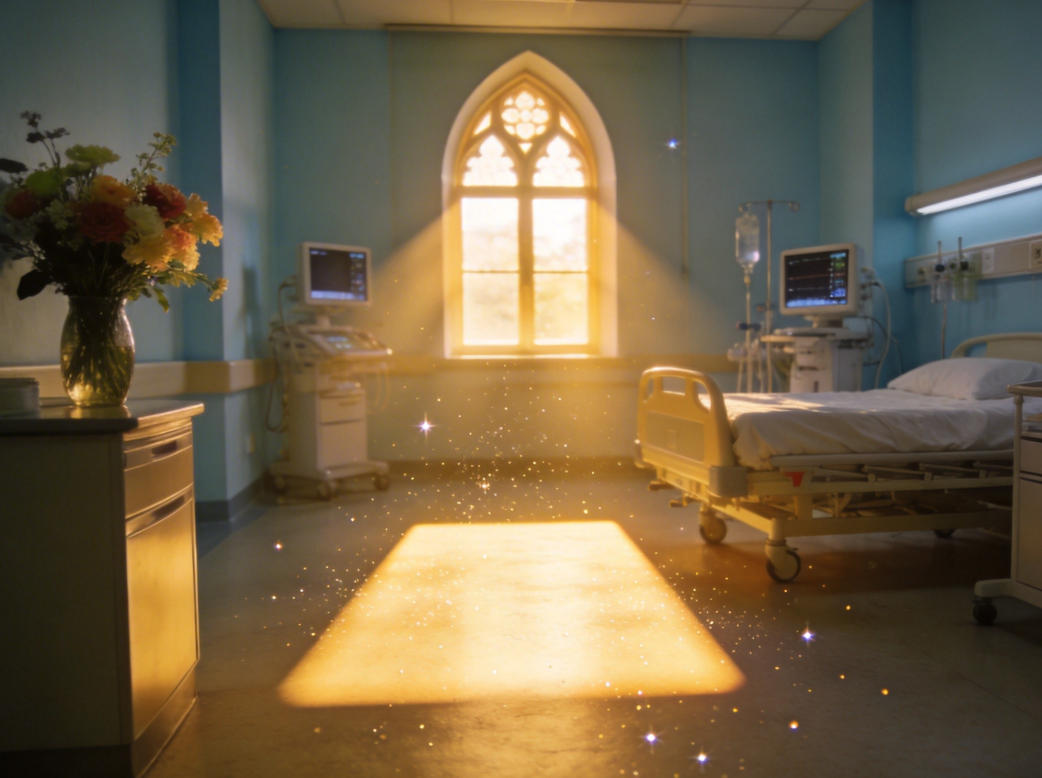
It started as a thin line near the door and slowly widened, creeping up the opposite wall until it painted a perfect rectangle of warmth on the pale blue paint. I watched, mesmerized, as dust motes danced in the beam, turning into tiny stars.
For those few minutes, the room was no longer just a hospital room; it was a cathedral of light. The anxiety didn't vanish, but it receded, making space for a different kind of feeling—awe, maybe, or simple gratitude.
That beam of sun became my daily appointment, a silent promise that the world outside was still turning, still beautiful, and still capable of reaching me.
Sunlight as Currency
Sunlight, in a hospital, is a currency. Not all rooms are created equal.
Some face east and are flooded with dawn, a gentle awakening that feels like a blessing. Others face west and catch the fiery farewell of sunset, a dramatic show that can either feel poignant or reassuring, depending on your mood.

My room during chemo faced south, which meant the light was indirect, soft, and persistent for most of the day. I learned its patterns. I knew that around 10 AM, a patch would appear on my blanket, perfect for warming my hands. By 2 PM, it would climb the chair where my husband Mark sat, illuminating the book he was reading.
I'd watch the light move across his face, highlighting the worry lines that hadn't been there a year before, but also the steadfast love in his eyes. That light became a clock, a companion, a reminder of time's passage—not as something to fear, but as a natural rhythm I was still part of.
The Sacrament of Hot Water
If sunlight is the visual luxury, then hot water is the tactile one.
It sounds absurd, doesn't it? To cherish something as mundane as hot water. But when your body is weary from treatment, when your throat is raw and your skin feels papery, a simple mug of hot water can feel like a sacrament.
I'm not talking about tea or coffee—those have their place, but their flavors can be too much on a sensitive stomach. I mean plain, clear, steaming hot water.
There was a nurse, Elena, who understood this. She wasn't assigned to me, but she'd often stop by in the evenings during her rounds. She'd see me awake, staring at the ceiling, and without a word, she'd disappear and return with a fresh mug.
Not a plastic cup, but a proper ceramic mug from the staff kitchen. She'd place it on my bedside table, her hands steady.
"Just water," she'd say, her voice low. "Hot enough to feel it."
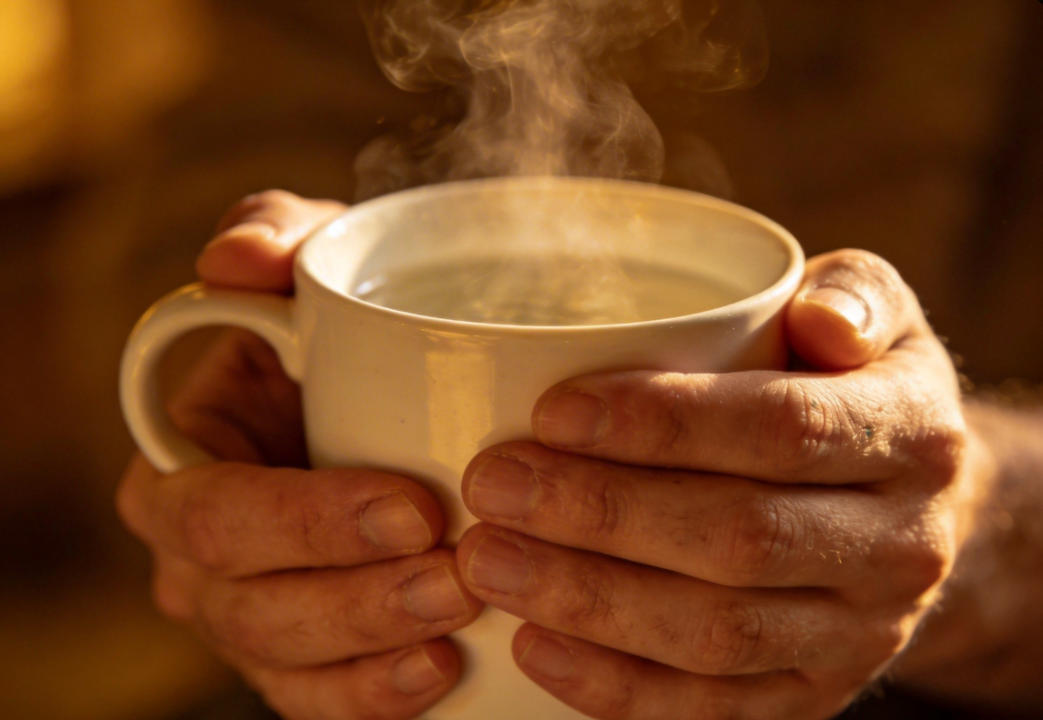
I'd wrap my hands around the mug, letting the heat seep into my palms, up my wrists. The first sip was always a revelation. It didn't cure anything, but it soothed. It washed away the metallic aftertaste of medication. It felt like warmth traveling from the outside in, a small rebellion against the cold that so often accompanies illness.
That mug of water was more than hydration; it was an act of kindness, a tiny gesture that said, "I see you, and I care that you are comfortable."
The Small Joys of Others
These little joys extend beyond light and warmth. They are:
- The crispness of freshly changed sheets, a moment of profound comfort when your body aches
- The unexpected smile from a cleaning staff member who takes an extra second to ask how you're doing
- The dog-eared novel a previous patient left behind, offering an escape into another world for a few chapters
- The single flower in a vase on the windowsill, brought by a friend
During my time as a volunteer, I've seen patients discover their own versions.
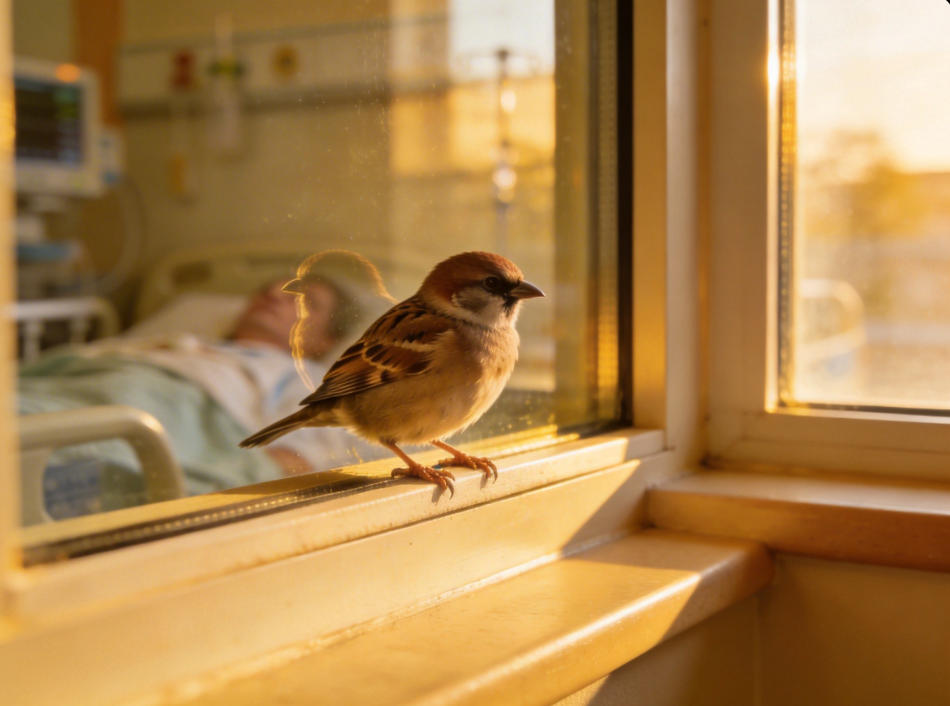
Mr. Henderson, a retired gardener with lung cancer, would spend minutes each day watching a sparrow that nested in the eaves outside his window. He named her Betty and would give me detailed reports on her comings and goings. That bird became his connection to life, to routine, to something outside the confines of his illness.
Sarah, a young mother with lymphoma, found joy in the hospital's terrible cable TV. Specifically, the home renovation shows. She'd laugh at the dramatic reveals and make plans for her own kitchen "when all this is over." It wasn't about the shows; it was about the future they represented.
Cultivatin an Eye for Small Graces
So how do we cultivate an eye for these small graces when everything feels heavy? It doesn't require a positive-thinking mantra or forced optimism. It's more about gentle attention.
1. Engage Your Senses
When you feel overwhelmed, pick one sense and focus on it.
- What do you see right now? Trace the pattern of light on the wall.
- What do you hear? The distant hum of the elevator, the soft footsteps in the hall.
- What do you feel? The texture of the blanket, the coolness of the rail.
This sensory grounding can pull you out of the spiral of thoughts and into the present moment, where small comforts often live.
2. Create Tiny Rituals
My ritual was the sunlight watch. It could be anything: savoring that first sip of hot water, arranging the cards on your table, listening to one specific song at the same time each day.
Rituals give structure and something to look forward to, a pocket of predictability in an unpredictable situation.
3. Accept Offers of Small Kindness
When someone brings you a mug of water, or adjusts your pillow, or simply sits with you, receive it fully. In that reception, the joy is doubled—it exists both in the gesture and in your appreciation of it.
4. Share Them
Tell your nurse about the sparrow. Point out the beautiful sunset to your visitor. When we voice these tiny joys, we not only validate them for ourselves, but we also invite others into that moment of grace. It becomes a shared secret, a small light in a dim room.
The Footnotes of Healing
I won't pretend that noticing a sunbeam makes chemotherapy easy, or that hot water erases pain. It doesn't.
But these fragments of beauty and comfort do something else: they punctuate the monotony. They provide brief respites where you are not just a patient, but a person—a person who can still feel wonder, who can still be warmed, who can still appreciate a simple, perfect thing.
In the grand narrative of healing, these moments are the footnotes. But sometimes, it's the footnotes that hold the most truth.
They remind us that even in the hardest chapters, there are sentences worth underlining. There is still light. There is still warmth. And sometimes, that is enough to get you through to the next page.
A Memory of Warmth
As I write this from my home in Portland, three years in remission, I still keep that mug from the hospital on my kitchen shelf. I don't use it every day, but sometimes, on difficult mornings, I fill it with hot water and hold it, remembering Elena's hands, the south-facing window, and the slow, faithful arc of the sun.
The memory of those small joys is itself a kind of warmth, one that continues to reach me, even now.